
When someone calls about a leak, they usually assume the roof is shot. Most of the time it isn’t. These are the seven things we find most often on North Texas roofs, roughly in order.
1. Cracked pipe boots
Every plumbing vent that comes through your roof has a boot around it, usually a rubber collar on a metal or plastic base. The Texas sun cooks that rubber until it cracks, often years before the shingles wear out. Water runs right down the pipe. This is the most common leak we fix, and one of the cheapest when it’s caught early.
2. Step and wall flashing
Anywhere a roof meets a wall, like a second story or a dormer, there should be step flashing woven in with each course of shingles. When it’s missing, reused from an old roof, or just smeared with caulk, water gets behind it. This is especially common on two-story homes.
3. Chimney flashing
Chimneys need step flashing on the sides, a counter flashing over it, and a cricket on the uphill side of wider chimneys to split the water. Shortcuts here show up as stains on the ceiling or wall near the fireplace.
4. Roof vents and turbines
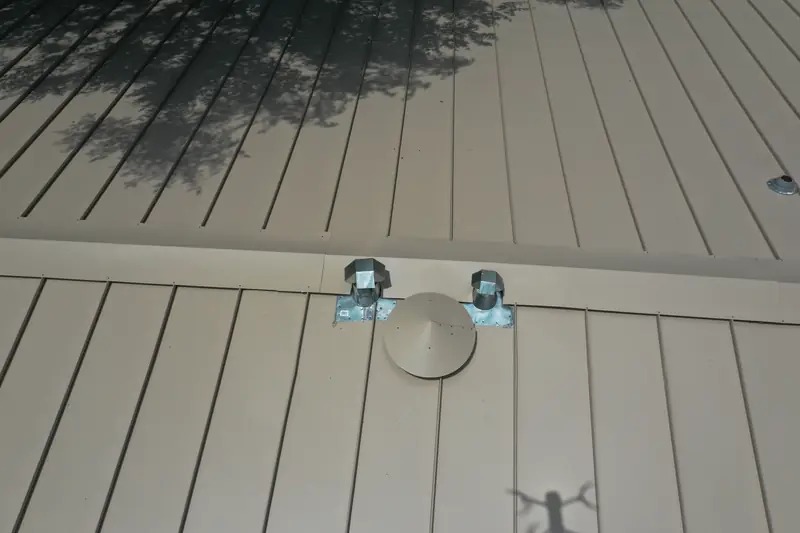
Box vents, turbines and power vents all cut a hole in the roof. Cracked housings, missing fasteners, rusted flashing and nails left exposed on top will all leak. Hail also damages vents before it damages anything else.
5. Valleys
Valleys carry more water than any other part of the roof. If shingles were cut short, the leak barrier was skipped, or debris from trees piles up and holds water, valleys leak. Under big trees, this is one of the first places we look.
6. Exposed and backed-out nails
Nails that were driven crooked, left exposed, or have backed out over time leave a hole straight into the deck. You’ll often find them at ridge caps, around vents and where someone did a previous repair.
7. Wind-lifted or missing shingles
Strong wind can lift shingles and break the seal strip, even when nothing blows off. Water then gets driven under them in the next storm. Improper nailing during install, like nailing too high or using too few nails, makes this a lot more likely.
Bonus: it’s not always the roof
Some “roof leaks” are condensation from a poorly ventilated attic, an AC drain line, or water getting in through siding or a window above a lower roof. That’s why we inspect before we quote, and why a construction background helps.
What to do if you have a leak
- Catch the water and protect what’s underneath.
- Take a photo of the stain and note when it leaks (every rain, or only wind-driven rain from one direction).
- If you can safely look in the attic, check for wet wood or insulation above the stain.
- Call a roofer who will trace it to the source instead of patching above the stain.
We find leaks for a living. Text us a photo of the stain at 214-471-6210 or see our roof repair page.