
North Texas gets hit with hail almost every spring, and sometimes in the fall too. Right after a storm, your phone and your front door get busy. Here’s what I’d tell a friend to do, in order.
1. Check for anything urgent
If water is coming into the house, deal with that first. Move what you can, put down buckets and towels, and call a roofer to get a tarp on. A tarp is cheap. Water damage inside the house is not. Take photos of the leak and the damage inside before anything gets cleaned up.
2. Look for clues from the ground
You can’t judge the shingles from the yard, but you can find clues that tell you whether it’s worth getting the roof looked at:
- Dents in gutters and downspouts
- Dings on the fins of your AC unit
- Dents on metal mailboxes, light fixtures or patio furniture
- Granules (looks like coarse black sand) piling up at the end of downspouts
- Damage to cars that were parked outside
- Broken window screens or chipped paint on the siding
Write down the date of the storm. Your insurance company will ask for it.
3. Get a real inspection before you file
This is the step people skip. Before you call your insurance company, have a roofer you trust get on the roof and take photos. If there’s no real damage, you haven’t opened a claim for nothing. If there is, you go into the claim knowing what’s damaged and with photos to back it up.
A good inspection covers the shingles on every slope, ridge caps, vents, pipe boots, flashing, skylights, gutters and any soft metal on the roof. Hail damage to shingles usually looks like dark spots where granules got knocked off, sometimes with the mat bruised underneath. You want photos, not just someone telling you “yep, you’ve got damage.”
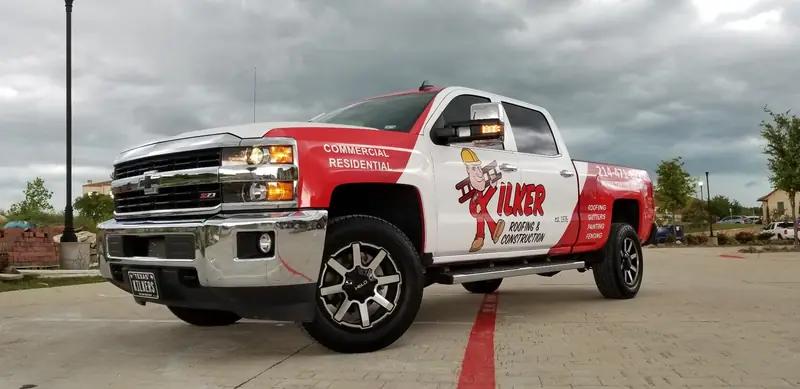
Kilker Roofing does free storm inspections with photos. If we don’t see damage worth a claim, we’ll tell you that. Call or text 214-471-6210.
4. Be careful who you let on your roof
After a big storm, crews come in from out of state and knock on every door in the neighborhood. Some are fine. Some are gone by summer, and so is your warranty. A few things to watch for:
- No local address or history. Ask how long they’ve been in the area and look them up.
- Pressure to sign today. Hail damage doesn’t get worse in a week. A contract signed on the porch can be hard to get out of.
- Offers to “cover” your deductible. In Texas, a contractor waiving or rebating your deductible is against the law. Your deductible is your share of the claim.
- Big upfront payment before any work. Ask how payments line up with materials and completion.
5. File the claim and meet the adjuster
If there’s damage, call your insurance company or file online. They’ll schedule an adjuster. It helps to have your roofer there for that inspection, on the roof, pointing out what they found. The adjuster is the one who decides, but a second set of experienced eyes helps make sure damage isn’t missed.
Policies have time limits for reporting storm damage. Check yours, and don’t sit on it for months.
6. Read the estimate before you sign anything else
Insurance estimates are usually written in Xactimate, line by line. Go through it with your roofer. Does it include all the slopes that were damaged? Ridge, vents, flashing, drip edge, the gutters? If something’s missing that the roof actually needs, it can be documented and sent back to the insurance company for review.
7. Understand how the money works
On most claims, the first check is the actual cash value: the replacement cost minus depreciation and your deductible. The depreciation that’s held back is usually released after the work is done and the roofer sends in final paperwork. If your mortgage company is on the check, they’ll have their own process to endorse it. Ask your roofer to walk you through the numbers on your specific claim.
The short version
- Stop any active leak and take photos.
- Look for dents and dings from the ground. Note the storm date.
- Get a free inspection with photos before filing.
- Avoid door knockers who pressure you or offer to cover your deductible.
- File, and have your roofer meet the adjuster.
- Go over the estimate line by line before work starts.